
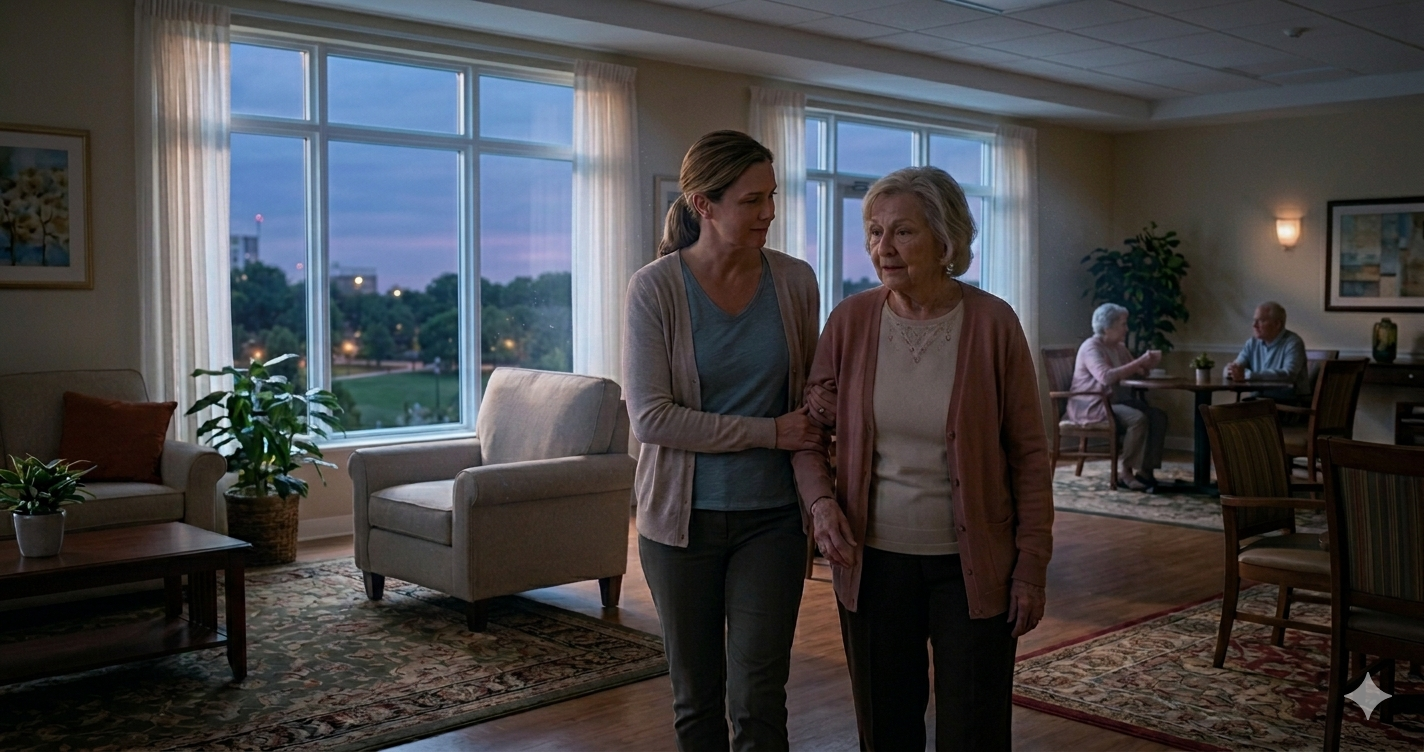
For twenty years, across my mother’s long decline, my brothers and I carried a quiet assumption: that keeping her at home was the loving choice, and that any other answer would be a kind of failure. A lot of families carry that same assumption. It is one of the heaviest things we carry, and almost nobody says it out loud.
So let me say it plainly. Deciding that a parent should move to assisted living is not abandoning them. In many situations it is the most loving, most clear-eyed thing a family can do — and the guilt you feel about it is not evidence that you’re making the wrong call. It’s evidence that you love them. Those are two different things, and learning to tell them apart is most of the work.
Common questions
What the guilt actually is
In The CareGiving Navigator, I wrote about the cauldron of feelings I had to come to terms with during my own caregiving years — sadness, anxiety, anger, and guilt all at once. On guilt specifically: “You may feel guilty for an assortment of reasons — for example, that you’re ‘not doing enough’ to make your loved ones happier or to improve their situation. Or maybe you feel guilty for neglecting your own children and spouse — or for enjoying your time away from caregiving responsibilities.”
Notice what’s in that list. Almost none of it is guilt about having done something wrong. It’s guilt about not being able to be everything to everyone at once — which is not a moral failing. It’s the human condition of a person stretched past what one person can do. The Family Caregiver Alliance describes this well: caregiver guilt frequently attaches itself to things that were never within your control in the first place.
Here is the reframe that helped me, and that I offer to every family I talk to: guilt is a feeling, not a fact. It tells you that you care. It does not tell you what the right decision is. When you let guilt make the decision, you tend to keep a parent in a situation that isn’t working — not because it’s best for them, but because changing it feels like a betrayal. The decision deserves a clearer input than that.
Decide from your parent’s needs
The cleanest way out of a guilt-driven decision is to anchor it in something concrete: your parent’s actual needs and safety. In the book’s fourth family conversation — the stay-or-move conversation — I list the warning signs worth watching for: withdrawal from social interaction, neglected hygiene, a history of falls, poor eating or weight loss, piles of unopened mail, mismanaged bills, missed medications.
Those signs aren’t a verdict. They’re information. When several of them are present and the in-home care plan is straining to keep up, the question shifts from “how do I feel about moving Mom?” to “what does Mom actually need to be safe and well — and where can she get it?” That second question has an answer you can investigate. Visit a couple of assisted living communities. Most families who’ve made this decision well say the visit changed how they thought about it — seeing the place as somewhere people genuinely live, not a warehouse, resets the whole frame.
There’s a fuller walkthrough of that conversation — when to have it, how to open it, what to listen for — in our guide on whether a parent should stay home or move. It’s the companion piece to this one.
Take care of yourself, too
I’ve said for years that the cardinal rule of caregiving is the one nobody tells you: take care of yourself, the caregiver. It’s the oxygen-mask instruction — you can’t take good care of your loved one if you’re not taking care of yourself. Caregiver burnout is real and measurable, and the guilt that keeps families from making a needed change is one of its most reliable engines.
If part of what’s driving the decision is that you are genuinely depleted, that is a legitimate input, not a shameful one. Sometimes the honest answer is that a parent’s needs have outgrown what any family member can sustainably provide — and that recognizing that is responsible, not selfish. Respite care and a real assessment of the current plan can help you see the situation clearly before you decide.
What to do next
If you’re working through the move-or-stay decision itself, start with the conversation guide: Should your loved one stay home or move? When you’re ready to evaluate specific communities, the situation page on considering assisted living walks through what to look for.
And if you’d like the chapter I wrote on caring for yourself while carrying all of this — the prerequisite no one warns caregivers about — the inline form below sends it directly to your inbox.
Free chapter: “Caring for the Caregiver” from Ron’s book, The CareGiving Navigator
The part most people skip, and shouldn’t. Send Ron’s chapter to your inbox.
Sources
- Ron Roel, The CareGiving Navigator, Chapter IV: Long-Term Care Options and Services, pp. 176–213 (the stay-or-move family conversation, warning signs, assisted living vs. skilled nursing) and Chapter VI: Caring for Yourself, the Caregiver, pp. 231–233 (the “cauldron of feelings,” guilt, the cardinal rule of self-care)
- Family Caregiver Alliance — Caregiver Guilt
- National Institute on Aging — Taking Care of Yourself: Tips for Caregivers
- Alzheimer’s Association — Residential Care and Making the Decision to Move
- CDC — Caregiving for Family and Friends: A Public Health Issue